
Education and the European Digital Agenda: Switzerland, Germany and Sweden after 1970

Education and the European Digital Agenda: Switzerland, Germany and Sweden after 1970

Also known as: Digital Agenda

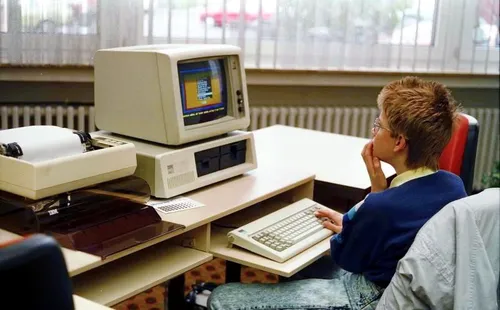
The adoption of information and communications technologies (ICTs) within public schooling, higher education, and vocational education and training has been widely acknowledged as a major challenge. The Education and the European Digital Agenda project aims to document how this challenge was confronted in Europe during the initial decades following the emergence of microchip technology, which fundamentally transformed businesses, public administration, and daily life. The database reconstructs the responses of policymakers and other relevant stakeholders in Germany (both the GDR and the FRG until 1990, and the unified German state from then onwards), Switzerland, and Sweden, as well as other international organisations such as EC/EU and UNESCO, to the educational challenges brought about by technological change from 1970 until the early 2000s, at the end of the dot-com boom.

Abstract

The dataset maps political initiatives and actors involved in education in the context of digital change during the period 1970–2000 in four political entities: Germany (FRG, GDR and unified Germany), Sweden, Switzerland, and Europe (European Communities [EC]/European Union [EU]). It consists of two sub-datasets: 1. The first sub-dataset contains information on the various political initiatives that were undertaken in these political entities to address the challenges posed by digital change in education. 2. The second sub-dataset includes information on the actors and platforms that played a role in the framing of these initiatives. Together, these two sub-datasets aim to provide an overview of the political initiatives and actors involved in addressing the challenges of digital change in education in Germany, Sweden, Switzerland, and the EC/EU. The database can be used to analyse and compare the different approaches taken by these political entities and to identify key stakeholders.

Publications

1. Flury, Carmen and Michael Geiss, eds., How Computers Entered the Classroom, 1960–2000: Historical Perspectives. Oldenbourg, De Gruyter, 2023. https://doi.org/10.1515/9783110780147
2. Flury, Carmen and Michael Geiss. Computers in Europe’s Classrooms: An Introduction. In How Computers Entered the Classroom, 1960–2000: Historical Perspectives, edited by Carmen Flury and Michael Geiss, 1–12. Oldenbourg: De Gruyter, 2023. https://doi.org/10.1515/9783110780147
3. Flury, Carmen, Michael Geiss, and Rosalía Guerrero Cantarell. “Building the Technological European Community Through Education: European Mobility and Training Programmes in the 1980s.” European Educational Research Journal 20, no. 3 (2020): 348–64. https://doi.org/10.1177/1474904120980973
4. Flury, Carmen. “Counting on Computers: New Information Technologies and Curricular Change in the GDR." PhD diss. University of Zurich, forthcoming.
5. Flury, Carmen. “Joining Forces: The Promotion of Public-private-partnerships to bring Computers into West German Schools in the 1980s.” In How Computers Entered the Classroom, 1960–2000: Historical Perspectives, edited by Carmen Flury and Michael Geiss, 123–145. Oldenbourg: De Gruyter, 2023. https://doi.org/10.1515/9783110780147
6. Geiss, Michael. “Computer Education in Switzerland: Politics and Markets in a Highly Decentralized Country.” In How Computers Entered the Classroom, 1960–2000: Historical Perspectives, edited by Carmen Flury and Michael Geiss, 147–170. Berlin: De Gruyter Oldenbourg, 2023. https://doi.org/10.1515/9783110780147
7. Geiss, Michael. “Der Pakt mit dem Computer.” Geschichte der Gegenwart. February 9, 2022. https://geschichtedergegenwart.ch/der-pakt-mit-dem-computer/
8. Geiss, Michael, Carmen Flury and Rosalía Guerrero Cantarell. “Beyond the Classroom: Economic Policies and the Past Futures of Education and Training in the European Community, 1970–2000.” In How Computers Entered the Classroom, 1960–2000: Historical Perspectives, edited by Carmen Flury and Michael Geiss, 191–216. Berlin: De Gruyter Oldenbourg, 2023. https://doi.org/10.1515/9783110780147
9. Grütter, Fabian. “After Mainframes: Computer Education and Microcomputers in Western Switzerland During the 1980s and 1990s.” History of Education. (Accepted)
10. Grütter, Fabian. “The Smaky School Computer: Technology and Education in the Ruins of Switzerland’s Watch Industry, 1973–1997.” Learning, Media and Technology. https://doi.org/10.1080/17439884.2023.2216463
11. Guerrero Cantarell, Rosalía and Carmen Flury. “Making the Computer Fit for School: Efforts to Develop a State-Mandated Educational Computer in Sweden and East Germany (1980s-1990s).” Historical Studies in Education (Accepted).
12. Guerrero Cantarell, Rosalía. “Teachers Translating and Circumventing the Computer in Lower and Upper Secondary Swedish Schools in the 1970s and 1980s.” In How Computers Entered the Classroom, 1960–2000: Historical Perspectives, edited by Carmen Flury and Michael Geiss, 99–122. Oldenbourg: De Gruyter, 2023. https://doi.org/10.1515/9783110780147
13. Guerrero Cantarell, Rosalía. “Technology as a Woman’s Call: The Efforts of the Fredrik Bremer Association to Promote Women’s Education in Technology 1978–1999.” Nordic Journal of Educational History. Special Issue: Exploring the History of Knowledge and Education 9, no. 2 (2022): 125–147. https://doi.org/10.36368/njedh.v9i2.268
14. Guerrero, Rosalía, Carmen Flury and Michael Geiss. “From Victims to Economic Assets: Training Women in an Emerging Digital Society During the Late 1970s to the Mid-1990s.” History of Media Studies 3 (July 2023). https://doi.org/10.32376/d895a0ea.6e09b010

Cite this Project

Citation

Guerrero Cantarell, Rosalía, Carmen Flury, Fabian Grütter and Michael Geiss (2023). Education and the European Digital Agenda: Switzerland, Germany and Sweden after 1970. DaSCH, https://ark.dasch.swiss/ark:/72163/1/0848.

Data Access

Access Rights
Full Open Access
License
Creative Commons Attribution-NonCommercial 4.0 International License
(2023-07-03)

Copyright

Education and the European Digital Agenda: Switzerland, Germany and Sweden after 1970

Contact

Professor, Head of the Centre for Education and Digital Transformation at the Zurich University of Teacher Education Director Centre for Education and Digital Transformation
Pädagogische Hochschule Zürich - PHZH
michael.geiss@phzh.ch

Project Timeline

Period
2019-04-01 – 2023-03-31
Status
Finished

Funding

Grants
Swiss National Science Foundation (SNSF)
Grant: 182217
Project funding
More info
Data Management Plan
Not accessible